
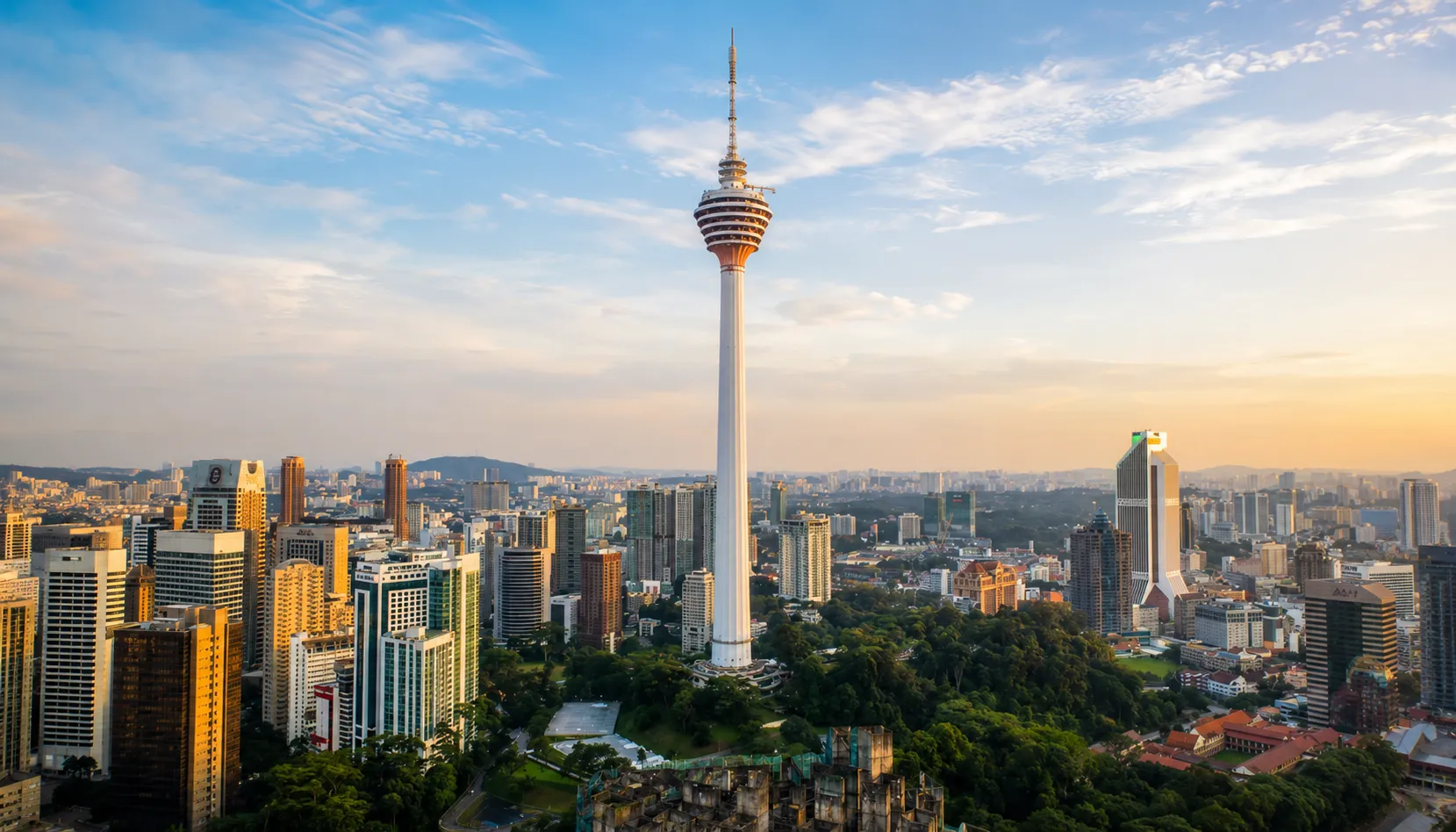
Day 27 in Kuala Lumpur.
You’ve finally got the rhythm. A café in Bangsar that starts your flat white before you sit down. Fibre that doesn’t die halfway through a client call. Nasi lemak downstairs, halal by default, no cross-examination of the waiter.
Then the calendar pings. Your 30-day eVisa runs out Friday.
So you pack. Fly home. Reset in three months.
That loop is the most expensive habit a Karachi freelancer can build. Two flights, a fresh deposit, and roughly two weeks of lost billing every single time you start over.
There’s a legal way out. Barely anyone in Pakistan is using it.
What is Malaysia’s DE Rantau nomad pass?
DE Rantau is Malaysia’s official digital nomad pass, run by the Malaysia Digital Economy Corporation (MDEC). It lets you live in Malaysia while your income keeps coming from clients or an employer outside Malaysia.
The numbers that decide whether you qualify:
- Income, tech and digital roles: $24,000 a year. Roughly $2,000 a month, evidenced with 12 months of statements or contracts, per this 2026 DE Rantau guide.
- Income, non-tech professionals: $60,000 a year. Malaysia widened eligibility in June 2024 to founders, CEOs, accountants, legal counsel and business development roles. The government’s own announcement puts it plainly: “The minimum income requirement for non-IT and non-digital talents is set at USD60,000 per year” (digital.gov.my).
- Validity: 12 months, renewable once. Most 2026 guides put the ceiling at 24 months total.
- Fee: around RM1,000, roughly $220, plus RM500 per dependent, with review taking 2 to 8 weeks (OneVisaCenter, 2026).
- Your spouse and children can apply as dependents, concurrently or after you.
Two catches the application page doesn’t shout about. The pass doesn’t cover Sabah and Sarawak, so Borneo is a visitor trip, not your base. And a 12-month stay can pull you into Malaysian tax residency, even though foreign-source income held by a pass holder sits under a special exemption.
DE Rantau vs the 30-day eVisa vs Thailand’s LTR
| Malaysia eVisa (tourist) | Malaysia DE Rantau | Thailand LTR | |
| Stay allowed | 30 days per entry | 12 months, one renewal | 10 years |
| Income proof | None | 24,000/yrtech,24,000/yrtech,60,000/yr non-tech | 80,000/yrplus80,000/yrplus40,000 assets |
| Processing | 3 to 7 working days | 2 to 8 weeks | Longer, asset-verified |
| Family | Kids under 12 on a parent’s eVisa | Spouse and children as dependents | Dependents allowed |
| Legal remote work | No | Yes, foreign income only | Yes |
Pakistani passport holders can’t get visa-on-arrival in Malaysia. The eVisa is the standard route, and it’s a 30-day stay valid within 90 days of issue, typically cleared in 3 to 7 working days (Uniworld Travel, July 2026). Fine for a holiday. Useless as a base.

Thailand’s LTR sits at a different altitude entirely: 80,000ayearinincomeand80,000ayearinincomeand40,000 in assets, per The Visa Index’s 2026 country guide. If you clear that, Thailand is worth a look. Most Karachi freelancers billing in dollars clear $24,000 long before they clear $80,000.
Why applying in August, not November, actually matters
Work backwards.
MDEC review runs 2 to 8 weeks. Then you convert the pass in KL. Then you find a flat, get the internet installed, and figure out which suburb puts you near a school if the kids are coming.

If you want the family joining you over the December and January winter break, August is the month you gather documents. November is the month you panic.
That’s the whole timing argument. No countdown theatrics.
The routing risk nobody prices into a KL move
Karachi to Kuala Lumpur almost always connects through a Gulf hub. Right now, that connection isn’t a neutral detail.
Safe Airspace’s regional summary for July 2026 states that “the US-Iran ceasefire has effectively broken down”, with renewed activity around the Strait of Hormuz (Safe Airspace). OPSGROUP reports EASA has advised operators to avoid the airspace of Bahrain, Kuwait, Qatar, the UAE and the Gulf of Oman west of 58°E at all levels, with separate bulletins covering Iran, Iraq and Lebanon (OPSGROUP briefing).

Read that honestly. Gulf hubs have largely kept operating, but the risk of delays, rerouting and short-notice schedule changes is elevated, and it’s changing week to week.
This is where Rahat’s years inside Qatar Airways operations earn their keep. She reads irregular operations for a living. When you’re moving your working life to another country, the question isn’t just which fare is cheapest. It’s which routing leaves you options if a hub gets messy on the day. A Colombo or Bangkok connection keeps you clear of Gulf airspace entirely. Costs more sometimes. Sleeps better always.
Why no package can move you to Kuala Lumpur
Search “Malaysia package from Karachi” and you’ll find the same shape everywhere. Five nights KL, three nights Langkawi, airport transfers, one city tour.
Nobody sells the thing you actually need: a document trail that survives MDEC review, a two-week landing plan, a neighbourhood recce in Mont Kiara or Bangsar, halal-normal daily life sorted from day one, and flights built so your family can join you later without rebooking everything.

A package sells you nine nights. You’re asking for nine months.
That’s not bad execution by an agency. That’s the model itself. Packages exist to be sold a hundred times, which is exactly why they can’t bend for one person’s visa timeline. Zaviamo has never sold one, and that’s the whole origin story.
Frequently Asked Questions
Can Pakistani passport holders apply for Malaysia’s DE Rantau nomad pass?
Yes. DE Rantau is open to qualified foreign professionals whose income comes from outside Malaysia, and the application runs through the MDEC portal online. You’ll still need the income threshold for your category, a clean criminal record, health insurance and a passport with long validity. Pakistani nationals do not get visa-on-arrival in Malaysia, so nothing here replaces getting your paperwork right first.
How long does the DE Rantau pass take to process?
Reported review times run 2 to 8 weeks depending on how complete your file is, after which you finalise the pass at the Immigration Department or a Malaysia Digital Hub in Malaysia. Build in extra weeks for gathering 12 months of income evidence and insurance documents. Applying in August is comfortable for a December arrival. Applying in November is not.
Can my wife and children come with me on DE Rantau?
Yes. Dependents including a spouse and children can apply alongside you or after your pass is approved, with an added fee of around RM500 per dependent. Plan schooling and housing around Peninsular Malaysia, because the pass does not cover Sabah and Sarawak.
Is Malaysia’s nomad pass better than Thailand’s LTR visa?
For most Pakistani freelancers, yes, on entry cost alone. DE Rantau asks $24,000 a year for tech and digital roles while Thailand’s LTR asks $80,000 a year plus $40,000 in assets. Thailand wins on length, a 10-year runway versus Malaysia’s 24-month ceiling, so the honest answer depends on whether you want a base for two years or a decade.
Your move
Tell us what you actually need. A 12-month KL base with the family joining in December. Or a solo three-month test run before you commit to the pass.
Start planning your Malaysia trip on WhatsApp. Your first custom quote is free, within 24 hours, zero pressure.
Prefer typing it out in a form? Use the plan page instead, and see what we build for Malaysia.
P.S. The tax detail most people miss: foreign-source income received in Malaysia by a DE Rantau pass holder sits under a special exemption, while any Malaysian-source income does not. That single line changes how you invoice, and it’s worth getting right before you fly. Plan my Malaysia base on WhatsApp.
P.P.S. Check your routing before you check your rent. Gulf airspace advisories are moving week to week, and the connection you booked in August isn’t guaranteed to look the same in December.