
You earn in dollars. You work from a laptop. And every 30 days, Thai immigration treats you like a tourist who overstayed their welcome.
That was the old game.
Fly to Bangkok. Stretch a tourist stamp. Do a visa run to the border every few weeks. Pray nobody at the desk asks why you keep coming back.
Then in July 2024, Thailand changed the rules.
The Destination Thailand Visa, the DTV, landed as the closest thing the country has ever offered to a real digital nomad visa. And for a Karachi developer, freelance designer, or remote consultant, it looks like a dream on paper.
Five years. Long stays. Legal work-from-Phuket status.
But “on paper” is doing a lot of heavy lifting in that sentence.
Because the DTV has rules that hit Pakistani passport holders differently than they hit a British or American applicant. And almost nobody writing about this visa bothers to tell you that.
So before you start screenshotting villas in Chiang Mai, read these five hard truths.
1. The DTV gives you 5 years, but each stay caps at 180 days
Let’s start with what’s genuinely good.
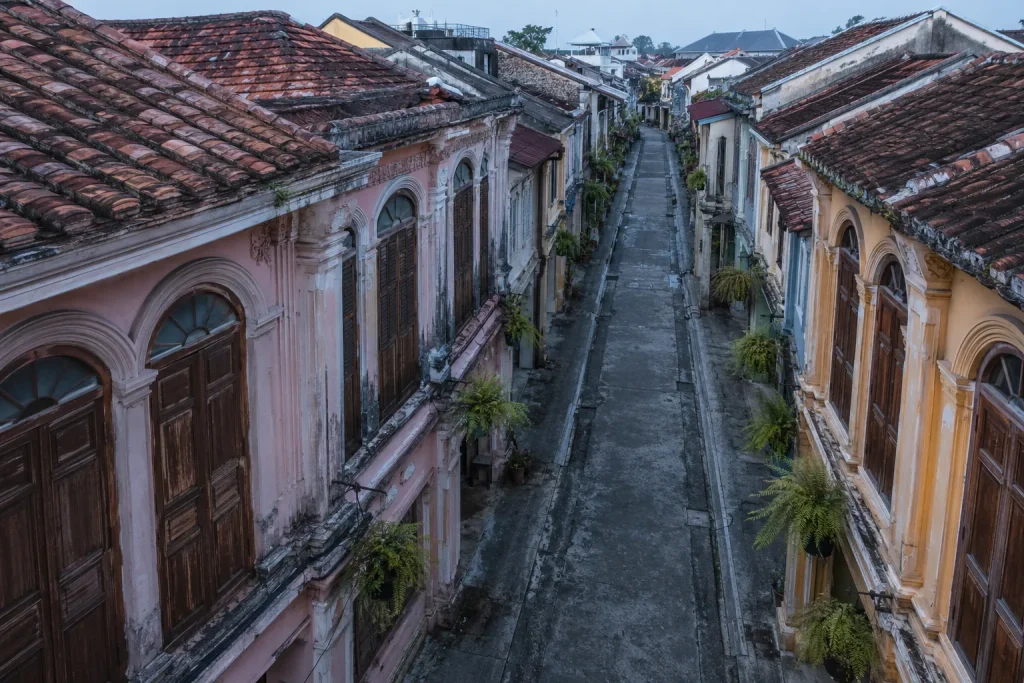
The Destination Thailand Visa is a multiple-entry visa valid for five years, allowing holders to stay in Thailand for up to 180 days per entry.
And it gets better. Each 180-day stay can be extended for an additional 180 days, enabling visa holders to remain in Thailand for up to 360 consecutive days before needing to exit and re-enter the country.
So the math is: nearly a full year in, a quick border hop out, then back in again. For five years. No more monthly visa-run anxiety.
This is real. This is the upgrade.
2. The cost is low, but the bank balance is the real gate
Here’s where people misread the visa.
The initial visa application costs 10,000 Thai Baht (approximately $280-300 USD), with extensions costing 1,900 THB per occurrence.
Cheap, right? Compared to a Thai retirement visa or the Privilege visa, absolutely.
But the fee is not the barrier. The bank balance is.
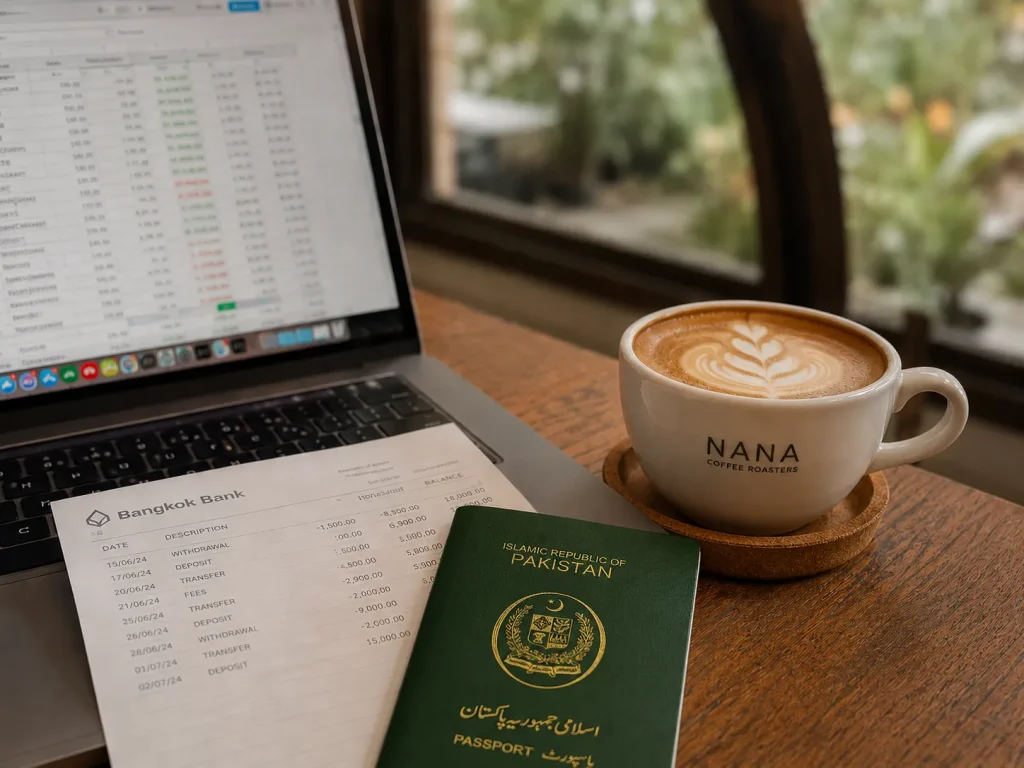
Applicants must demonstrate financial stability through bank statements showing a minimum balance of 500,000 Thai Baht. That’s roughly 16,000 USD sitting in your account.
And not just sitting there for a day. Embassies want to see it held steadily.
For a lot of upper-middle-class Karachi professionals, that’s doable. For a young freelancer just getting started? That number is the wall, not the fee.
One more catch worth knowing. The fee itself isn’t fixed. The DTV visa application fee can range from ฿8,361 to ฿37,721 depending on location you are applying in. So the “$300” you read online can swing higher depending on which embassy processes you.
3. The watchlist nobody mentions hits Pakistani passports
This is the truth that gets buried, and it’s the one that matters most.
The DTV’s “Soft Power” route lets you qualify through Muay Thai training instead of remote work. Sounds fun. Enroll in a gym, train, get your letter, apply.
Except one of Thailand’s most cited gyms, FITFAC, openly states it does not issue Letters of Acceptance to applicants from the following countries: China, Hong Kong, India, Myanmar (Burma), Cambodia, Pakistan, Bangladesh, and all African countries except South Africa.
Read that list again. Pakistan is on it.
This isn’t an official government ban. It’s a practical watchlist. In practice, Thailand maintains a watchlist of nationalities that are considered high-risk for long-term visas due to recurring immigration issues.
What does this mean for you? It means the “just train Muay Thai” shortcut you saw on TikTok may quietly not work with the green pasaport. You’ll likely need the proper remote-work route, with real employment or freelance evidence, and you’ll want to apply through the right channel from Pakistan.
A package agency will never flag this. They’ll sell you the dream and let you discover the watchlist at the embassy counter.
4. Where you apply changes everything
The DTV is not one process. It’s a different process at every embassy.
Each embassy is different, and may charge different DTV fees, demand to see more than 500,000 THB in your accounts, or require more/different evidence of finances or employment.
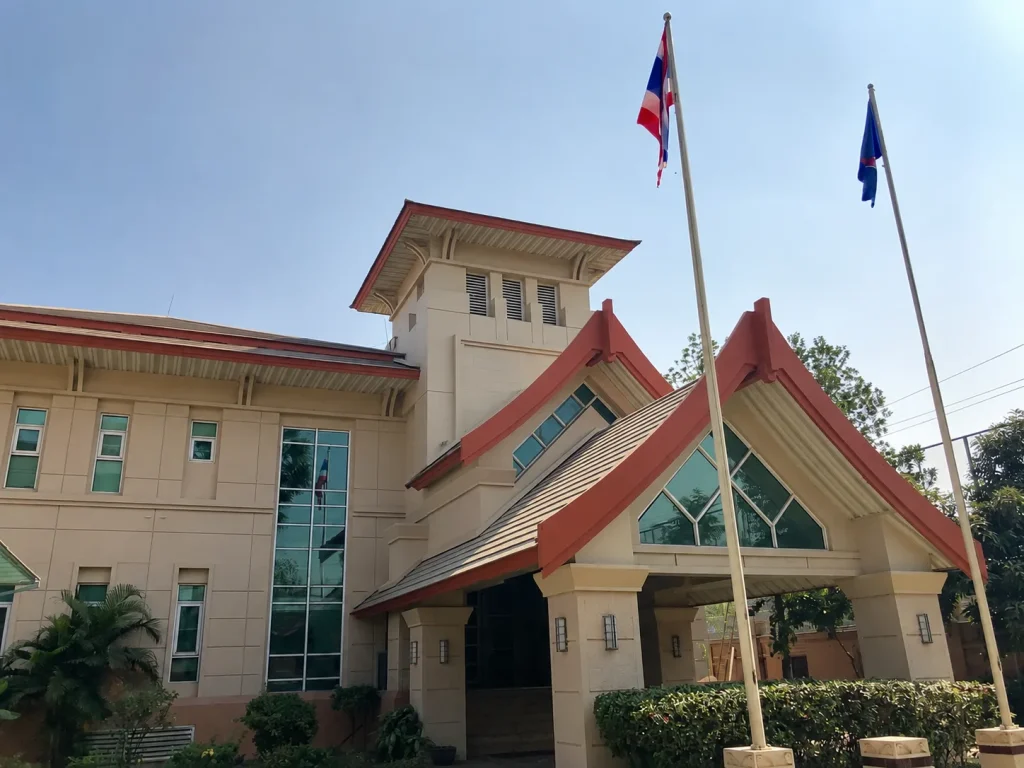
And one rule trips up almost everyone. DTV applications cannot be submitted while physically present in Thailand. Applicants must exit the country before initiating the application process.
You also can’t just fly to Kuala Lumpur and apply there casually. Some embassies do not accept entry stamps alone or hotel bookings for applicants who are not legal residents of that country.
Translation for a Pakistani applicant: apply from Pakistan, with your documents in order, the first time. Reapplying after a rejection is harder, not easier.
5. The Thailand in the news is not the Thailand you’re flying to
Open any travel advisory right now and you’ll see warnings. Don’t panic. Read carefully.
The UK’s FCDO advises against all but essential travel to areas within 20km of the land border with Cambodia. There has been real fighting there. But that’s a remote frontier, nowhere near where you’d actually live or work.
Outside those border zones, the picture is steady. Outside these regions, tourism in Thailand continues as normal, including Bangkok, Chiang Mai, Phuket, and other major destinations.
There’s also a tourist-visa change brewing that doesn’t affect DTV holders but is worth knowing. As of June 2026, Thailand has approved a return from 60 to 30 days of visa-exempt stay for eligible travellers. One more reason a long-stay visa beats stretching tourist stamps.
And because the Middle East has been unstable, routing matters. Escalation in the Middle East has caused widespread travel disruption, including airspace closures, delayed and cancelled flights. A KHI to Bangkok itinerary can route through several Gulf hubs, and which one you pick affects delays. This is exactly the kind of call Rahat handles. She spent years inside Qatar Airways operations, so when a hub gets messy, she knows which routing actually holds up. Meet the founders here.
Frequently Asked Questions
How long can a Pakistani stay in Thailand on the DTV visa?
The DTV is valid for five years with multiple entries. Each entry allows a 180-day stay, and you can extend that once for another 180 days, giving you up to 360 continuous days before you exit and return. It’s the longest legal stay Thailand currently offers remote workers.
How much money do you need for the Thailand DTV visa Pakistan?
You need to show a minimum bank balance of 500,000 Thai Baht, roughly 16,000 USD. The application fee itself is around 10,000 THB, but it can range from about 8,361 to 37,721 THB depending on which embassy you apply through.
Can Pakistanis qualify for the DTV through Muay Thai training?
It’s risky. At least one major certified gym, FITFAC, will not issue Letters of Acceptance to Pakistani applicants because of an informal high-risk watchlist. The safer route for a Pakistani passport holder is the remote-work category with proper employment or freelance evidence.
Is Thailand safe to travel to in 2026?
Major destinations like Bangkok, Chiang Mai, and Phuket continue normal tourism. The active warnings apply to remote zones near the Cambodia border and the three southernmost provinces. Avoid those frontier areas and check your government’s advisory before you fly.
So is the DTV worth it for you?
If you earn in foreign currency, work remotely, and can hold that bank balance, the DTV is a genuinely strong move.
But a strong visa with the wrong paperwork is still a rejection.
That’s the part a package can’t solve. A package hands you a brochure and a booking. It can’t read your bank statements, pick the right embassy, structure your remote-work evidence, or warn you about the watchlist sitting between you and that 5-year stamp.
We do that. We’ve never sold a package, because no template fits a freelancer’s irregular income or a family relocating with school-age kids. Your situation gets built from scratch. See how we actually plan a trip.
And once the visa’s sorted, the real fun starts. Where in Thailand do you base? Bangkok for the energy, Chiang Mai for the cost, Phuket for the beach? Halal food, prayer logistics, family-friendly neighbourhoods. That’s the build we love. Start with our Thailand page.
The 60-day tourist window is shrinking. The long-stay route is the smart play now.
Tell us your dream Thailand setup. Your first custom quote is free, within 24 hours, zero pressure.
P.S. The watchlist thing is the one that stings people. A DHA freelancer told us his Muay Thai “shortcut” looked perfect online, until a gym quietly declined his letter because of his passport. We would have flagged that before he wasted a week. The first quote costs you nothing. The wrong application costs you a rejection on record.
P.P.S. Middle East airspace is still twitchy. If you book your own KHI to Bangkok flights without checking which Gulf hub is routing cleanly this week, you risk a delay that eats a connection. Rahat watches this daily. Let her route it.